Current Location: Blog >
Japanese Server
1.
2) using low-latency vps and global cdn can shorten the time window of price update links, thereby reducing passive price reductions caused by price wars.
3) a reasonable set of domain name resolution and anycast dns can ensure rapid resolution when traffic bursts, shortening the first byte time of user requests.
4) faced with opponents collecting prices through large-scale crawlers, proxy pools and ip rotations need to be deployed on multiple vps to avoid being blocked.
5) at the same time, ddos defense and waf rules must be considered to prevent competing products or opponents from accidentally triggering attacks, causing delisting or page unavailability, and thus being forced to compromise on price.
2.
2) the data aggregation and rules engine is deployed on an independent host (sample configuration: 4vcpu/8gb ram/160gb nvme/2gbps) for deduplication, price comparison, triggering alarms and writing to the database.
3) the database adopts a master-slave architecture: the master database (sample configuration: 4 cores/16gb/500gb nvme) is responsible for writing, and 1-2 reading databases perform real-time queries to reduce the pressure on the main database.
4) it is recommended to use two types of proxy pools: http/https proxy and socks5, from different geographical locations (japan/hong kong/singapore). each collection vps holds 100-500 ip rotations.
5) example of average daily collection volume: if 1,000 skus are monitored, the collection frequency is once every 10 minutes, the single request volume is about 1,000 times/cycle, and the average concurrent requests per vps are controlled within 50-200 rps to prevent being blocked.
3.
2) using cdn can also reduce the bandwidth of the origin site, maintain page availability during peak price push periods, and reduce the cpu load of the origin site.
3) comparative test (same sku in tokyo, japan node): the following is a comparison of typical indicators with and without cdn.
4) as can be seen from the table, cdn can reduce ttfb from 220ms to 65ms, significantly improve the page carrying capacity, and provide a better immediacy experience in price updates.
5) synchronizing these data within the group can help sellers determine when they need to upgrade bandwidth or switch cdn strategies, thereby avoiding passive adjustments in price wars.
4.
2) use memory cache (redis cluster, 3 nodes: 2gb/4gb memory configuration) to save real-time competitive product prices and thresholds, with read latency < 5ms.
3) example of pricing rules: when the price of a competing product is 5% lower than itself and the inventory is >50, an automatic -3% temporary promotion is triggered, with a cooling time of 10 minutes, and a queue is used to asynchronously deliver updates to product services.
4) in order to avoid the pressure on the main database caused by frequent database writing, event-based writing is adopted: price changes are first written to the message queue (kafka or rabbitmq), and independent consumers write to the database in batches.
5) in high-concurrency scenarios, it is recommended to separate reading and writing and horizontal sharding. for example: divide sku into 4 shards according to sku_id%4. each shard corresponds to an independent mysql instance, and read requests are borne by read-only replicas.
5.
2) routing and dns strategy: use anycast dns to reduce the risk of single point of failure, and set the dns ttl to 60 seconds to quickly switch to the backup node.
3) suggestions for current limiting parameters: set a smooth rate of 10 req/s for a single ip request, and allow 50 requests in bursts. if it exceeds, 429 or verification code challenge will be returned.
4) back-end elastic scaling: use auto-scaling groups (elastic cloud hosts) to automatically add instances when cpu > 60% or rps > 1000 to ensure system stability during rush sales or price fluctuations.
5) monitoring and drills: configure a heartbeat once per minute, threshold alarms for key indicators (error rate/response time/bandwidth), and conduct ddos and failover drills every quarter.
6.
2) original deployment (problem point): a single vps (4vcpu/8gb/100gb nvme/1gbps) is used as a collection and pricing service. as a result, the collection ip is blocked, database writing delays and page timeouts occur.
3) adjusted architecture: split into 3 acquisition vps (2vcpu/4gb each), 1 pricing engine (4vcpu/8gb), redis cluster (3 nodes, 4gb each), mysql master and slave (master: 4 cores/16gb, slave: 2 read-only).
4) protection and cdn: connect to cdn+waf, set the traffic cleaning threshold to 15gbps, anycast dns multi-link disaster recovery, and single ip current limit 10 req/s.
5) transformation results (data): the average system response time dropped from 680ms to 280ms; the price update delay dropped from an average of 120s to 22s; page availability increased from 99.1% to 99.95%.
7.
2) it is recommended to share a standardized emergency template: including backup domain names, dns switching steps, cdn traffic limit activation and customer service skills, so that the group can quickly respond to price wars or traffic abnormalities.
3) for sellers who are not familiar with technology, one-click vps and cdn access scripts are provided (operation and maintenance scripts need to have logs and rollbacks) to reduce the risk of misoperation.
4) regularly conduct case reviews in the group: display specific server configurations, costs and effects to help group members understand the input-output ratio.
5) final reminder: technology is not everything, but correct server architecture, cdn and ddos strategies can minimize the risk of "passive price reduction" caused by price wars, while ensuring the stability of user experience and operating income.
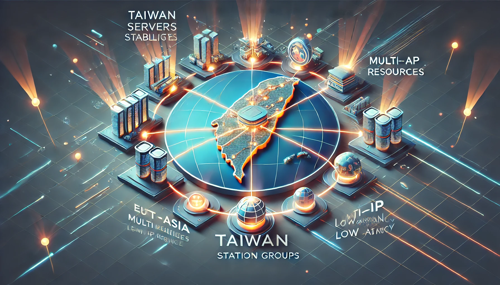
overview: why wechat sellers should pay attention to infrastructure such as servers and cdn
1) in the seller communication group of qoo10 japan station, price changes of competing products often spread within a few minutes. monitoring and rapid response rely on a stable collection and publishing platform.2) using low-latency vps and global cdn can shorten the time window of price update links, thereby reducing passive price reductions caused by price wars.
3) a reasonable set of domain name resolution and anycast dns can ensure rapid resolution when traffic bursts, shortening the first byte time of user requests.
4) faced with opponents collecting prices through large-scale crawlers, proxy pools and ip rotations need to be deployed on multiple vps to avoid being blocked.
5) at the same time, ddos defense and waf rules must be considered to prevent competing products or opponents from accidentally triggering attacks, causing delisting or page unavailability, and thus being forced to compromise on price.
2.
competitive product monitoring collection architecture and vps configuration recommendations
1) it is recommended to split the collection layer and storage layer: the collection nodes are deployed on 3 to 6 lightweight vps (sample configuration: 2vcpu/4gb ram/80gb nvme/1gbps), responsible for distributed crawling and agent rotation.2) the data aggregation and rules engine is deployed on an independent host (sample configuration: 4vcpu/8gb ram/160gb nvme/2gbps) for deduplication, price comparison, triggering alarms and writing to the database.
3) the database adopts a master-slave architecture: the master database (sample configuration: 4 cores/16gb/500gb nvme) is responsible for writing, and 1-2 reading databases perform real-time queries to reduce the pressure on the main database.
4) it is recommended to use two types of proxy pools: http/https proxy and socks5, from different geographical locations (japan/hong kong/singapore). each collection vps holds 100-500 ip rotations.
5) example of average daily collection volume: if 1,000 skus are monitored, the collection frequency is once every 10 minutes, the single request volume is about 1,000 times/cycle, and the average concurrent requests per vps are controlled within 50-200 rps to prevent being blocked.
3.
cdn, caching strategy and monitoring performance data display
1) use hierarchical caching for product details pages: static resources (pictures/css/js) are cached by cdn; prices and inventory use short ttl or edge side includes (esi) for partial refresh.2) using cdn can also reduce the bandwidth of the origin site, maintain page availability during peak price push periods, and reduce the cpu load of the origin site.
3) comparative test (same sku in tokyo, japan node): the following is a comparison of typical indicators with and without cdn.
| scene | average ttfb(ms) | first screen loading (ms) | cache hit rate | concurrent hosting (rps) |
|---|---|---|---|---|
| no cdn (directly from the origin site) | 220 | 820 | 0% | 150 |
| enable cdn (static + esi) | 65 | 320 | 78% | 1200 |
5) synchronizing these data within the group can help sellers determine when they need to upgrade bandwidth or switch cdn strategies, thereby avoiding passive adjustments in price wars.
4.
dynamic pricing engine and database optimization (real-time response in price wars)
1) the dynamic pricing module is recommended to be deployed as microservices: price decision service (2vcpu/4gb), rule engine (4vcpu/8gb) and historical data analysis (6vcpu/16gb).2) use memory cache (redis cluster, 3 nodes: 2gb/4gb memory configuration) to save real-time competitive product prices and thresholds, with read latency < 5ms.
3) example of pricing rules: when the price of a competing product is 5% lower than itself and the inventory is >50, an automatic -3% temporary promotion is triggered, with a cooling time of 10 minutes, and a queue is used to asynchronously deliver updates to product services.
4) in order to avoid the pressure on the main database caused by frequent database writing, event-based writing is adopted: price changes are first written to the message queue (kafka or rabbitmq), and independent consumers write to the database in batches.
5) in high-concurrency scenarios, it is recommended to separate reading and writing and horizontal sharding. for example: divide sku into 4 shards according to sku_id%4. each shard corresponds to an independent mysql instance, and read requests are borne by read-only replicas.
5.
ddos defense, waf and business continuity solutions
1) basic protection: purchase a cdn or hosted waf with cleaning capabilities (for example, capable of resisting traffic attacks above 20gbps).2) routing and dns strategy: use anycast dns to reduce the risk of single point of failure, and set the dns ttl to 60 seconds to quickly switch to the backup node.
3) suggestions for current limiting parameters: set a smooth rate of 10 req/s for a single ip request, and allow 50 requests in bursts. if it exceeds, 429 or verification code challenge will be returned.
4) back-end elastic scaling: use auto-scaling groups (elastic cloud hosts) to automatically add instances when cpu > 60% or rps > 1000 to ensure system stability during rush sales or price fluctuations.
5) monitoring and drills: configure a heartbeat once per minute, threshold alarms for key indicators (error rate/response time/bandwidth), and conduct ddos and failover drills every quarter.
6.
real case: japanese seller a’s response process and configuration details
1) description of the situation: seller a encounters concentrated price cuts on competing products on the qoo10 japan site once a week, resulting in twice that week system load surges and page slowdowns, with a single traffic peak reaching 800 rps.2) original deployment (problem point): a single vps (4vcpu/8gb/100gb nvme/1gbps) is used as a collection and pricing service. as a result, the collection ip is blocked, database writing delays and page timeouts occur.
3) adjusted architecture: split into 3 acquisition vps (2vcpu/4gb each), 1 pricing engine (4vcpu/8gb), redis cluster (3 nodes, 4gb each), mysql master and slave (master: 4 cores/16gb, slave: 2 read-only).
4) protection and cdn: connect to cdn+waf, set the traffic cleaning threshold to 15gbps, anycast dns multi-link disaster recovery, and single ip current limit 10 req/s.
5) transformation results (data): the average system response time dropped from 680ms to 280ms; the price update delay dropped from an average of 120s to 22s; page availability increased from 99.1% to 99.95%.
7.
implementation suggestions and collaboration process within wechat group
1) set up a "technology + operation" column in the seller communication group, and regularly push monitoring indicators (cache hit rate, ttfb, collection success rate) to facilitate quick operational decisions.2) it is recommended to share a standardized emergency template: including backup domain names, dns switching steps, cdn traffic limit activation and customer service skills, so that the group can quickly respond to price wars or traffic abnormalities.
3) for sellers who are not familiar with technology, one-click vps and cdn access scripts are provided (operation and maintenance scripts need to have logs and rollbacks) to reduce the risk of misoperation.
4) regularly conduct case reviews in the group: display specific server configurations, costs and effects to help group members understand the input-output ratio.
5) final reminder: technology is not everything, but correct server architecture, cdn and ddos strategies can minimize the risk of "passive price reduction" caused by price wars, while ensuring the stability of user experience and operating income.
- Latest articles
- Overseas Deployment Solutions With Low-cost, High-availability Options Are Achieved Through Vietnam's Native IP VPS
- Application Maintenance Manual: Precautions For Running Legacy Software On US VPS Windows 2003
- Differences And Points To Note Regarding Top-up And Consumption Habits On The Japanese Server Of Ser Light Japan
- Frequently Asked Questions About Vietnam CN2 VPS Traffic Billing And Bandwidth Selection
- How Do Companies Evaluate Hong Kong's High-defense Servers, As Well As Analysis Of After-sales Service And Response Speed
- Implementation Method For Enterprise-level Backup Solutions In Japanese Cloud Server Rentals
- Tracking Tools Teach You How To Determine If A US Server Is Offline And The Current Impact Area
- How To Ensure Access Security And Account Protection For The Taiwan Capital Securities Portal
- The Business Continuity Advantage Brought By Japan's Bidirectional CN2 Routing Controllability
- Case Study: Using Cheap Malaysian Servers To Support Small Websites And Test Environment Practice
- Popular tags
Taiwan Broadband
Cost-effective
Best Configuration
Cheapest
France
Taiwan Station Shopee Store Group
Equipment Sharing
Taiwan Network Server
Virtual Private Servers
Stability
Native Taiwan Ip
Shopee Taiwan Store Group Fund Management Inventory Management Server Vps Host Domain Name Cdn High Defense Ddos Dexun Telecom
Access Speed Optimization
Taiwan Vps Operator
Application
Merchant Group
Shopee Taiwan Store Group Pricing Promotion Combination To Improve Conversion Formula Practical Operation
Private Servers
Taiwan Cloud Server Wholesale
Odin
Access Frequency Control
Delay
Network Protection
Cross-border Access Speed
Stress Test Method
Migration Guide
Taiwan Big Water Pipe Vps
Promotion Rhythm
Search Engine Optimization
World Of Warcraft
Related Articles
-

Summary Of Common Problems And Solution Steps For Simulator Japanese Native Ip Settings
comprehensive summary of common problems and step-by-step solutions for < b> simulator to obtain < b > japanese native ip, covering < b > vps / < b > server selection, network routing, dns, port forwarding, < b > cdn and < b > ddos defense and other practical suggestions, and recommends dexun telecommunications as a stable japanese node service provider. -
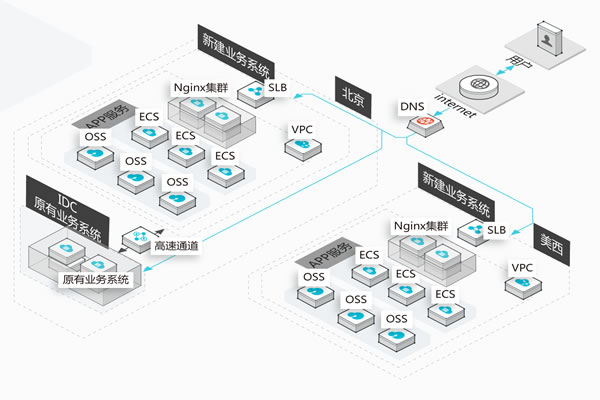
How To Achieve A Smooth Experience Of Watching Japanese Movies On Alibaba Cloud Server
discuss how to achieve a smooth experience of watching japanese movies through alibaba cloud servers, including vps selection, server configuration and recommended service providers. -

Architectural Evolution: A Case Study Of How The Japanese Made Servers From A Single Machine To A Multi-region Deployment
based on the practical experience of japanese companies, this complete architecture evolution case from single-machine deployment to multi-region disaster recovery includes design principles, migration steps, practical details and common pitfalls, helping the engineering team achieve stable and reliable multi-region deployment.